

DUST COVERS AND CNC MACHINE PROTECTION
1. Let CNC dust protection solutions become a factor in enhancing production capacity.
Dust shielding systems (dust covers) are no longer merely passive covers. They have evolved into complex kinematic mechanisms, acting as the “immune system” that protects the precision mechanical components of machine tools from harsh manufacturing environments.
To clearly understand the value of dust shielding systems, they need to be analyzed from three reciprocal perspectives:
-
Technical Integrity
The protection system maintains an ideal operating environment for precision mechanical structures. Micron-sized grinding dust, when entering slide ways, acts as a secondary abrasive agent (three-body abrasion), destroying the lubricating oil film and causing surface scratches. Thoroughly blocking these agents helps the machine maintain geometric accuracy over the long term.
-
Economic Efficiency
The cost to replace a ball screw set or guide rail system on large-scale CNC machines (such as gantry mills) is extremely high, not to mention the opportunity cost due to production downtime. Effective protection systems reduce the frequency of major maintenance and repairs, extending the lifecycle of expensive components.
-
Health, Safety, and Environment (HSE)
In the context of increasingly strict labor safety regulations, shielding systems play a role in preventing hot chips from hitting operators and controlling oil mist from dispersing into the workshop environment.
Below are the production protection solutions for various types of CNC machining equipment provided by VIETWELD:
2. Dust covers for heavy industrial machinery: Gantry Mills and Boring Machines.
For large-scale machine lines like Gantry Mills – the challenge lies in the scale. Protecting a travel path of 20-30 meters requires specialized engineering solutions.
2.1. Machine Roof Covers
On large Gantry machines, especially when machining composite materials (carbon fiber) or high-speed machining, preventing dust from flying up and controlling noise is mandatory.
-
Self-supporting Structure: Roof Bellows systems use lightweight but rigid aluminum frames, allowing spans up to 9-10 meters without sagging.
-
Translucent Material: Utilizing translucent fabric materials helps take advantage of workshop light, reducing the need for internal lighting in the machining area and saving energy.
-
Kinematics: This system must move synchronously with the Gantry bridge at high speeds, requiring precise guide rail and roller systems with low friction.

2.2 Telescopic Steel Way Covers
Telescopic Steel Way Covers represent the pinnacle of mechanical protection in heavy machining environments. This is the standard solution for CNC milling, lathes, and vertical/horizontal machining centers where chip volume is high and temperatures are extreme.

2.2.1 Material Architecture and Geometric Design
The robustness of telescopic way covers comes from the selection of materials and optimal geometric design:
Manufacturing Material: Most cover plates are manufactured from high-grade cold-rolled steel or stainless steel (for corrosive environments) with thicknesses ranging from 1.5 mm to 3 mm. This thickness is calculated to withstand impact from large chips or dropped tools without deformation, ensuring the integrity of the interlocking structure.
Surface Morphology:
-
-
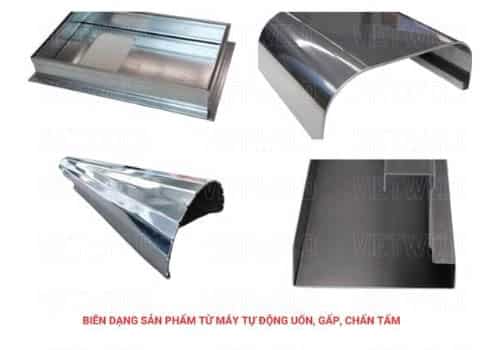
Peaked/Roof Shape: This design creates a natural slope, helping coolant and chips slide down to the recovery trough quickly via gravity. This prevents chip buildup on the cover surface – a primary cause of jamming and increased drag on axis motors.
-
Flat Shape: Used when Z-axis space is restricted. However, it requires an extremely efficient wiper system.
-
2.2.2 Dynamics and Synchronization Mechanisms
The biggest challenge for telescopic covers on modern CNC machines is speed. The inertia of heavy steel plates becomes a significant issue.
-
Damping Mechanism: In older designs, steel plates impacted each other when extending or retracting, causing loud noise and vibration. Modern systems use a scissor mechanism or dampers to synchronize movement. This mechanism ensures plates move simultaneously at a lower relative velocity, canceling vibrations and minimizing mechanical stress on connection points.
-
Performance: With advanced damping technologies, telescopic systems can operate stably at speeds up to 60-100 m/min and acceleration of 1g, meeting the demands of high-speed machining.
2.2.3 Wipers – The Critical Line of Defense
Wipers determine 80% of the cleaning efficiency of telescopic way covers.
-
Construction: The wiper blade is usually made from wear-resistant Polyurethane or NBR synthetic rubber, mounted on a stainless steel or aluminum frame.
-
Function: Wipers must perform two contradictory tasks: be rigid enough to scrape off hot chips adhering to the lower plate surface, yet soft and tight enough to prevent high-pressure coolant from penetrating gaps.
-
Maintenance: Modern designs allow for replaceable lips without dismantling the entire cover box, significantly reducing Mean Time To Repair (MTTR).
2.3. Modular Design for Easy Maintenance
With these massive systems, total replacement upon damage is economically unfeasible. Manufacturers like Dynatect and Hennig design systems in Modular forms, allowing for the replacement of individual convolutions or separate steel plates. This helps reduce Life Cycle Cost (LCC).
3. Roll-up Systems: Optimal Space Saving
While telescopic way covers dominate in terms of rigidity, Roll-up covers are the optimal solution for restricted spaces and applications requiring high speeds with low moving mass. This is a segment production managers should pay special attention to for optimizing workshop space and operating costs.

3.1. Operating Mechanism and Core Advantages
This system operates on the rolling principle (similar to a roller shutter or projection screen), using torsion springs or motors to maintain tension.
-
Space Benefits: The retracted size of roll-up covers is much smaller than telescopic way covers, allowing for maximized machine travel within a fixed machine frame space.
-
Durability: Premium multi-spring systems like SURE-SPRING® can achieve a lifespan of over 1,000,000 cycles, ensuring long-term reliability.
3.2. Comparative Analysis: Alumaflex™ vs. Steelflex®
The choice between aluminum and steel for roll-up covers depends entirely on the specific application environment. Below is a detailed comparative analysis to support decision-making:
| Technical Characteristics | Alumaflex™ (Aluminum Alloy) | Steelflex® (Stainless Steel) |
| Material Structure |
Extruded aluminum slats linked via hinges, anodized surface. |
Seamless stainless steel surface or reinforced steel bands, high-strength construction. |
| Load Capacity |
Withstands hot chips, light coolant, accidental impacts. Not designed for walk-on loads. |
Walk-on Duty: Can withstand operator weight, heavy chips, and strong impacts from workpieces. |
| Deflection | Medium. Requires support if the span is wide. |
Low. Specially designed to reduce deflection over wide spans. |
| Aesthetics |
High. Flat, polished surface, providing a modern look for the machine. |
Industrial, robust, and durable over time. |
| Repairability |
Replacement of individual aluminum slats or the entire curtain. |
Modular: Allows for replacement of damaged segments, reducing the cost of full replacement. |
| Optimal Application |
Vertical Machining Centers (VMC), Z-axis protection, machine doors, positions requiring aesthetics. |
Gantry Mills, Boring Machines: Pit covers, long way covers, creating safe walkways for maintenance. |
4. Bellows Protection (Folded Covers)
Bellows represent absolute flexibility. Unlike the rigidity of steel, bellows rely on technical coated fabric materials to create tight protection in complex spaces.
4.1. Bellows
Dynatect and leading manufacturers use various fabrication methods such as heat-sealed, sewn, or molded to suit each type of environment.
-
Materials: Material choice determines the bellows’ lifespan.
Polyurethane-coated Polyester (TPU): Good balance between tear resistance and oil/water resistance.
Silicone-coated Aramid/Kevlar: Extremely high temperature resistance, flame retardant, used for welding or plasma cutting environments.
Hypalon/Neoprene coated fabric: Good abrasion and weather resistance.

4.2. Armored Bellows
An inherent weakness of fabric bellows is vulnerability to sharp hot chips. The Armored Bellows solution (steel-armored bellows) has overcome this by attaching stainless steel slats to each fold.
-
Mechanism: The steel slats overlap like fish scales, creating a rigid armor layer that prevents hot chips from direct contact with the fabric while maintaining flexible expansion capability. This is the ideal solution for high-speed CNC milling machines with high chip volumes but insufficient space for Telescopic way covers.

4.3. Fiber Laser Solutions (Strict Requirements)
-
Wavelength Difference: Fiber Lasers operate at a wavelength of ~1.06 µm (near infrared), while CO2 is 10.6 µm. The short wavelength of Fiber is extremely dangerous to the retina and easily leaks through small gaps.
-
Requirements for Laser:
-
Light-tight: Bellows must ensure no reflected laser beams leak out.
-
Heat Resistant and Flame Retardant: Laser cutting dust is extremely fine and hot; bellows must be made from high-grade fireproof materials.
-
Smoke and Dust Management: Bellows are often designed tight to integrate with smoke extraction systems, preventing fine metal dust from dispersing and damaging expensive optical lenses.
-
The explosion of Fiber Laser cutting machines (like those supplied by Vietweld and partners) sets protection requirements completely different from traditional CO2 Lasers.
5. Appendix: Quick comparison table for selecting protection cover solutions.
| Protection Type | Key Technical Specifications | Outstanding Advantages | Typical Applications |
| Telescopic Steel Covers | 1.5-3mm Steel, NBR wipers | Best impact resistance, durable | Gantry mills, Boring machines |
| Bellows Covers (Folded) | TPU/PVC coated fabric, PVC frame | Flexible, affordable price | Grinding machines, CMM machines |
| Armored Bellows Covers | Fabric + Stainless steel slats | Resists hot chips, flexible | High-speed machining such as laser |
| Roll-up Systems (Alumaflex) | Extruded aluminum, roll-up type | Aesthetics, space saving | Vertical axes, machine doors |
| Roll-up Systems (Steelflex) | Stainless steel, load-bearing | Walk-on, ultra-durable | Pit covers, gantry mills |
| Machine Roof Cover | Aluminum frame bellows | Large area coverage, translucent | Gantry mills, Boring machines |
6. Maintenance, Repair, and Operations (MRO) Strategy.
In the modern manufacturing model, maintenance is no longer reactive (repairing when broken), but predictive and preventive.
6.1. Identifying signs of damage and maintenance procedures.
Production and operation managers should note the following signs to plan timely maintenance:
-
Worn Wipers: Oil streaks or small chips appearing on the machine way after the cover passes. This is a sign that the wiper has lost its scraping ability.
-
Abnormal Noise: Metallic impact sounds when the machine reverses motion indicate loose dampers or pulling mechanisms.
-
Surface Deformation: Dents on telescopic covers prevent smooth movement, causing overload on servo motors.
Basic Maintenance Procedure:
-
Periodically clean chips from crevices and drain troughs.
-
Inspect and replace wiper lips immediately upon signs of aging.
-
Lubricate cover sliding surfaces with specialized oil to reduce friction.
6.3. Industry 4.0 Integration: Smart Protection.
The future of protection systems is sensor integration (IoT). Advanced cover systems are beginning to integrate:
-
Force Sensors: Monitoring cover pull force to detect jams or abnormally high friction.
-
Vibration Sensors: Detecting wear in guide rollers. This data is fed into maintenance management systems to perform Predictive Maintenance strategies, helping prevent failures before they occur.
7. Conclusion
Machine tool shielding and protection systems are a technical field requiring a deep understanding of materials, dynamics, and manufacturing processes. From the rigidity of steel in Telescopic Steel Covers to the intelligent flexibility of Alumaflex and Steelflex, bellows, or Armored Bellows, each solution holds the key to equipment durability and performance.
For business owners and production managers in Vietnam, investing correctly in these systems, combined with proactive maintenance, is not only an asset protection measure but a strategy for long-term production cost optimization.
Vietweld, as a leading solution partner, is committed to leading the market by providing in-depth knowledge and advanced protection products (from Telescopic Steel Covers to the intelligent flexibility of Alumaflex and Steelflex, bellows, or Armored Bellows), meeting the strict standards of modern production systems.
For consultation on maintenance, servicing, as well as dust cover solutions, please contact: